What Seamless Blue: New Poetry from West London

September 5th, 2026

Join Shagufta Iqbal, Agnieszka Studzińska, and Robin Vaughan-Williams for readings from and conversations about their new poetry collections, all released September 2026:

Thursday 3 December 20267–9pm at
[VENUE TBA…our planned venue is no longer available, so we’re looking out for an alternative space] .

Tickets [available once a new venue is confirmed] are £5 and £12 and include refreshments:

  • £5 – includes entry and a glass of wine (or non-alcoholic drink)
  • £12 – includes the above plus a book of your choice (from the three publications mentioned above)
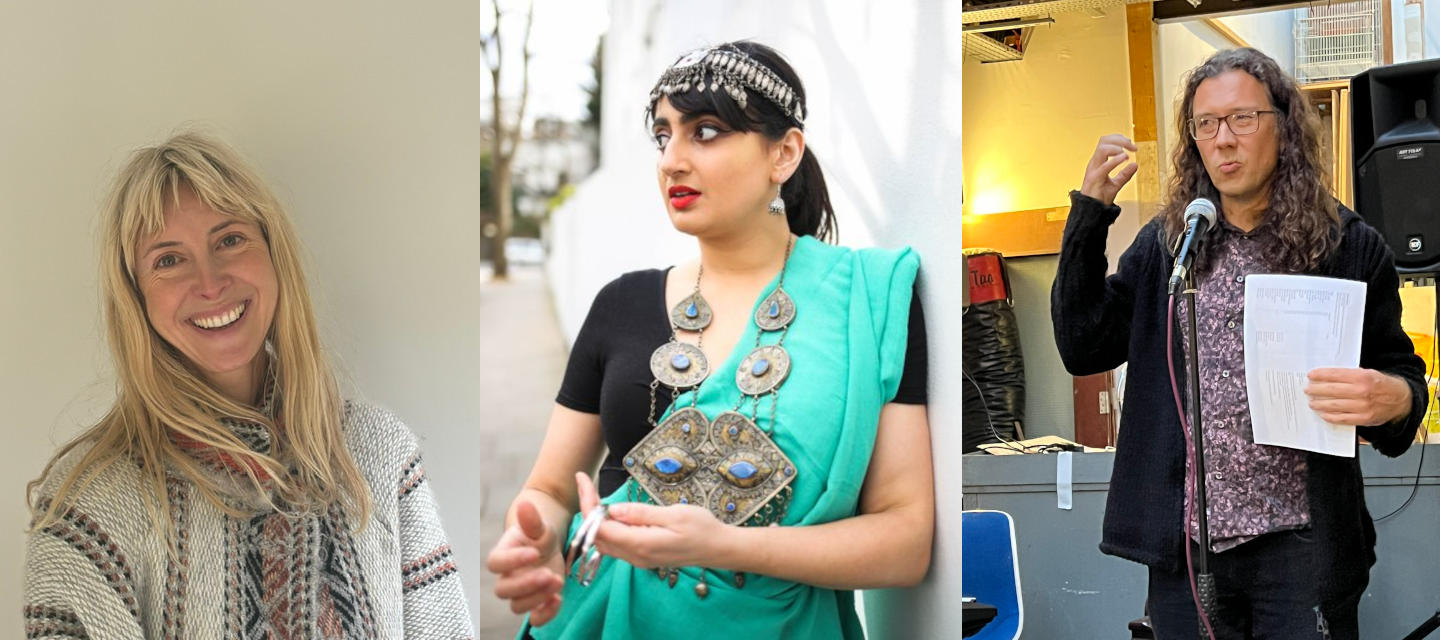
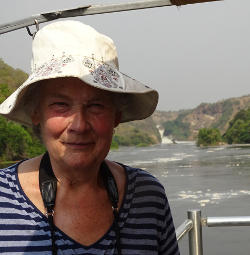
Three people, two women and one man. One smiling at camera, one leaning against wall looking to side, third gesturing in front of a microphone.

About the Poets

Agnieszka Studzińska (@househomepoetics) has a PhD in Creative Writing from Royal Holloway University of London. She also holds an MA in Creative Writing from the UEA. Her first debut collection, Snow Calling was shortlisted for the London New Poetry Award 2010. Her body of poetry includes What Things Are (Eyewear Publishing 2014) and Branches of a House (Shearsman Books 2021). She has had poems anthologised and featured in Writing Motherhood (ed) Carolyn Jess Cooke, Wretched Strangers, Borders Movement Homes, (ed) Agnes Lehóczky and numerous magazines. She teaches Creative Writing for the Poetry School and other educational institutes.

Seamless locates the self and the other within a rich tapestry of flora and fauna, never afraid to draw conclusions or to live with the uncertainty. Something immense and almost unnameable feels at stake in every poem. A brilliant and inspired collection. (Luke Kennard)

Robin Vaughan-Williams (@robinrvw) is a poet and producer based in London. His previous publications are The Manager (Happenstance Press) and How to Fix a Human (Sampson Low), and poems have appeared in magazines such as Acumen, Under the Radar, Long Poem Magazine, Dream Catcher, and Anthropocene. He has hosted live literature series in Sheffield, Nottingham, and Oxfordshire, and has been developing a practice in collaborative poetry improvisation since 2008. He’s been supporting creatives in West London since 2019, first at Creative People and Places Hounslow and then at Ealing Culture.

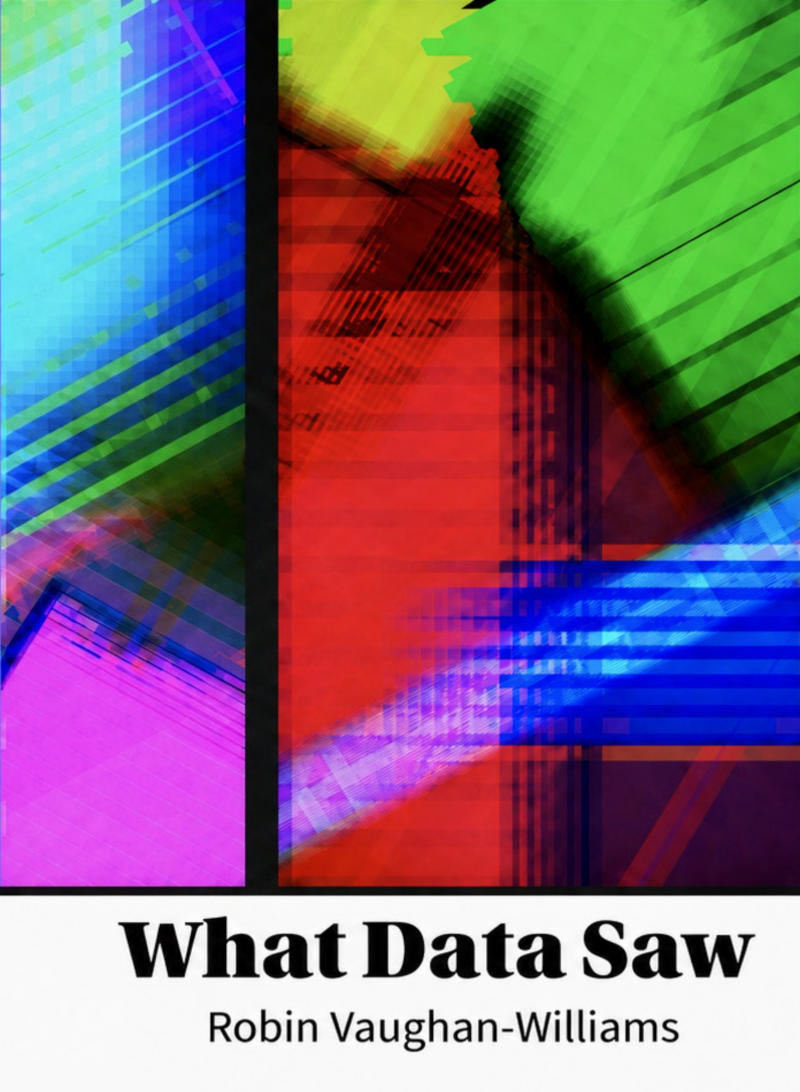
Robin Vaughan-Williams’s Data conjures an agile and darkly comic poetic presence. Lurid and yet poised, fantastical and yet disturbingly linked to a reality—this is a poetry that pretends to entertain whilst injecting its deadly analysis. (Mark Goodwin)

Shagufta K. Iqbal’s debut poetry collection Jam Is For Girls, Girls Get Jam was described by gal-dem as “heart-wrenching and relatable”, and praised by Nikesh Shukla as “a socio-political masterclass”. Her writing is included in Slam: You’re Gonna Wanna Hear ThisSpin! and The Book of Bristol. She has worked with the V&A, Tate, Southbank Centre, Hyderabad, Lagos, and Toronto Poetry Festivals. She has performed with Tedx WOMAD, Shambala and Glastonbury Festivals. Her poetry film Borders is a powerful exploration of displacement and resilience, and has received multiple international awards and screenings. She also writes for children.

Pick up the tin-can phone under a night sky and Blue, Babe answers. Shagufta K Iqbal has written a collection that asks: is love the wound, the healing, the ruin & rebuild, or D) all of the above? And the answer, every time, is D. This astonishing collection explores the slow, radical work of new beginnings against a tapestry of families and desire. (Cynthia Miller)


Smiley Bingo!

October 12th, 2018

Starter activity for children’s writing workshop (emotions)

Three weeks into the new after-school Creative Writing Club that I’m running for Years 4–6 at Joseph Hood Primary School in Merton. This week we wrote about emotions, and I developed a starter activity called Smiley Bingo!, which I thought I’d share.

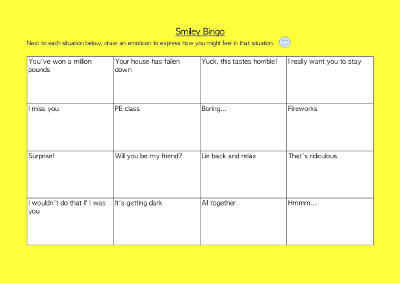
I’ve created an activity sheet with a series of situations that have emotional connotations on it. Most of the situations sound like they might be pieces of direct speech, e.g. ‘I miss you’ and ‘It’s getting dark’. Some are obvious, others are a bit more open to interpretation, like ‘Hmmm…’.

DOWNLOAD SmileyBingoActivitySheet.doc

DOWNLOAD SmileyBingoActivitySheet.doc

As a starter activity, participants can draw emoticons to go with each of the situations. We then did a silly warm-up pulling different kinds of smiles:

  • Smile like you’ve had a really nice day.
  • Smile like you’re having your picture taken.
  • Can you smile with your mouth open but without showing any teeth?
  • Who can do an upside-down smile, like Mr Miserable?

Then it was time for Smiley Bingo! I gave everyone one of the situations from the Bingo sheet, which were written on the back of a card so no one else would know which situation they had. We went round the circle, and everyone had to try to express their situation through a smile.

This can be quite tricky, as they are not all naturally smiley situations, but it gives everyone an idea of how many different meanings a smile can have…and how many different ways there are to smile. I gave a little demonstration first—if I had to smile ‘boring’, for example, I would first mime that situation (using facial expression and body posture), then try to smile while holding the freeze. But I don’t think they needed it—they eagerly rose to the challenge.

The bingo part comes next: when someone pulls a smile, everyone else has to guess which situation it is. If you get it right, you tick that situation. At the end everyone counts up their ticks to see who’s got the highest score. If no one correctly guesses a smile, the smiler gets the point.

With everyone enjoying themselves, relaxed and stimulated, we could move onto some writing.

Comments

  • The emoticons were an instant hit, and when we had a minute to spare at the end of the session after sharing they were eager to draw some more.
  • You can make up your own situations, of course. If you do, please leave a comment below letting us know what situations you used, and how your session went.
  • There were a couple of unexpected questions. Someone wanted to know what ‘I miss you’ and ‘Will you be my friend?’ meant, but that was easy enough to explain.
  • I developed the idea out of an exercise Caroline Bird did when I was on the TOAST Poets mentoring scheme in 2016. She gave us each an emotion on the back of a card, and we had to smile that emotion. So thank you, Caroline, for the idea.
  • I found it quite difficult to keep in my head all the different situations, while looking at the smiler, so perhaps sixteen options is too many. Having said that, it didn’t seem to bother the members of the writing club.

DOWNLOAD SmileyBingoActivitySheet.doc


Ann Vaughan-Williams Reading from The Lines We Trace

April 1st, 2018

Audio recordings of Ann Vaughan-Williams reading from her poetry collection The Lines We Trace.

All welcome to the book launch at Love & Dye (Raynes Park, SW London) on 14 April 2018 at 7.30pm.


The Lines We Trace

March 16th, 2018

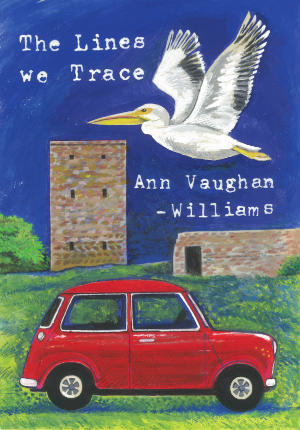
The Lines We Trace is the latest poetry collection by Ann Vaughan-Williams.

The Lines We Trace, by Ann Vaughan-Williams (image by Russell Thompson)

“A feast for the eyes

and ears…The Lines

We Trace offers

glimpses into little but

very big moments

over the course

of a lifetime.”


Ann will be launching the book at Love & Dye on 14 April, with poetry, song, and refreshments.

Book Launch: Saturday 14 April 2018, 7.30pm

Love & Dye, 187 Worple Road, London, SW20 8RE
(2 minutes from Raynes Park Station, and on the 57, 131, and 200 bus routes).

Let us know if you’re coming on Facebook or email annvaughanwilliams@gmail.com.

Be a hero! Download, share, print the poster (A4, PDF).

About the Book

Ann Vaughan-Williams is keenly attuned to the voices and habits of those around her. She often deals with difficult moments in life, such as illness and loss, but there is also birth and renewal — all approached with her characteristic humour and joy. (Tamar Yoseloff)

The Lines We Trace is a feast for the eyes and ears. It offers glimpses into little but very big moments over the course of a lifetime: from the first flickerings of consciousness in Uganda to languorous excursions along the River Wandle to the most serene pleasures of grandmotherhood. (Alex M. Frankel)

£3 from the sale of every book will go to the Bwindi Watoto School for orphans in Uganda, which Ann visited on her recent return to Uganda.

Ann Vaughan-Williams (photo: Tish Kerkham)

About Ann

Ann Vaughan-Williams née Kerkham was born in Uganda in 1941 and came to Norfolk when she was fourteen. She worked in Coventry, then Tooting, and at Bethlem and Maudsley Hospital as a Mental Health and Psychiatric Social Worker. For many years she taught Creative Writing in Merton, Kingston and Richmond, and is an active member of South London’s poetry community.

She was an editor of The Long Poem Magazine for five years, has co-edited poetry anthologies with Merton Poets and Whatley Writers, and is the founder of Write Afresh, a weekly writing group primarily for adults with mental health issues. She has an MA in Creative Writing from Bath Spa University.

Poems from The Lines We Trace have appeared in publications such as The North, Haiku Quarterly, Seventh Quarry, London Grip, Magma, and SlipstreamSea Poems (an art pamphlet), and the London Rivers anthology. Her first collection was Warming the Stones (1992).

Audio

Listen to Ann Vaughan-Williams reading from The Lines We Trace.


Club Britain (you’re not coming in)

July 18th, 2016

Club Britain

You’re not coming in.
Not by train or by bus or by sea.
Not by marriage or by family.
Your name’s not down and you’re not coming in.
Even if you half-drowned to get here
camped out in sub-zero temperatures
and risked everything clinging to the underside of a lorry.
Even if your house burnt down
and you spent your life savings getting on the list
it’s the wrong list
you’ve got the wrong name
and you’re not coming in.

Entry is at the discretion of management
and management don’t like your face.
They don’t like your sandals.
They don’t like your farmer’s outfit.
They don’t like your hair.
They don’t like your company.
They don’t like your dancing.
And they don’t understand a word you say.
The answer’s the same.
Not by the hair on my chinny-chin-chin
you’re not coming in.

(Robin Vaughan-Williams, 29 May 2016)


zq News April 2016: Words Aloud Sutton + Dance & Poetry Collaborations

April 15th, 2016

Words Aloud, Sat 16 April, 2–4pm

Sutton Central Library
I’ll be at Words Aloud in Sutton this Saturday with guest Lewis Buxton. I’m doing a slot, and the open mic is always excellent. Compered by Rachel Sambrooks. See their Facebook page for further details:https://www.facebook.com/events/455341517998768/

Publications and Collaborations

Quick Shifts dance collective

Quick Shifts Dance Improvisation Collective

One area of poetry improvisation I’m keen on exploring is movement—in terms of building up a relationship between speech and movement to give performances a more physical dimension, but also how posture and movement affect the way we speak while improvising. Getting performers pacing up and down the room can add nervous energy to their verbal improvisation, and simple things like whether they are looking at one another or up at the ceiling can dramatically change the dynamics.
So I was pleased to be invited to take part in a workshop with Quick Shifts, a dance improvisation collective based in Leicester, in February. We explored ways of incorporating speech into their performances, and one of these ideas formed the basis of their show on 3 March. I also benefitted a lot from seeing how people use improvisation in another artform where it is more established; for example, how they use the number of performers (solo, duet, triplet, etc.) as a central structuring principe.

Nottingham Poetry Improvisation Group

Earlier in April I met with Mark Goodwin for a session in Nottingham, where we recorded some duets and alternating solos (usually I work in bigger groups, so this was a good chance to explore techniques for working as a pair). We’ve both got the recordings, so there may be some alternative versions surfacing once we’ve got round to editing them. There are plans for more in Nottingham over the next few months, with probably a scratch event coming out of it at some point.

Obsessed with Pipework and Open Minds Quarterly

I was excited to hear last week I’ve got three poems in one of my favourite magazines at the moment, Obsessed with Pipework. ‘Story’ and ‘Lay-by’ are from my Poems from the Road sequence, and ‘Trickster Wind’ is about noises in the back yard. ‘Pills’ (which riffs off William Carlos Williams’ ‘This Is Just to Say’, but substitutes ‘pills’ for ‘plums’) appeared in Open Minds Quarterly 17:3.

Sutton Cultural Award

Next week I’m picking up an award, alongside Rachel Sambrooks, for our work on Sutton Stories, a project that ran from July to October last year as part of Imagine Festival of the Arts. It culminated in ‘a truly intergenerational event that gave the elderly a sense of connection to the community and emotionally moved many of the public’, in the words of the Festival Report. Thanks are also due to Joanna Steele, who put a huge amount of effort into the project and successfully managed to pull together all its different strands. There’s a blog post about the work I did with care home residents for the project here: http://www.zeroquality.net/zqblog/?p=747.


Digital Poetry Jam at WAC Arts

October 8th, 2015

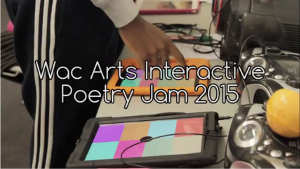
WAC Arts Interactive Poetry Jam 2015In September 2015 I ran a digital poetry jam project with young people in the WAC Interactive group at WAC Arts in North London. This was a trial project, exploring how we could use Keezy, a sampling app on the iPad, as a fun and engaging way into poetry. The idea was simple: we’d write lines (or just think them up in cases), sample them, and have a go at playing back in different ways. Participants would be able to create the content, use their voices, try out different arrangements, and produce a performance, but without the pressure of having to write a fully formed poem or read out in front of the whole class.
We had a fantastic range of responses, ranging from the poignant to the comic, and it was amazing to see how every person had a different approach to playing back the samples. One person would play back more conventionally, line by line, another would make use of the chorus, a third would go minimalist, stuttering back and forth between just two samples, and a fourth would use looping and layering to create a full-on DJ mash-up.

Here’s a mix I put together afterwards using Launchpad, a live sequencing app.

Many thanks to WAC Arts for giving me the chance to trial the project, and indeed sparking the idea in the first place through the Creative Innovation for Inclusion (CiFi) Think Tank  I attended there back in January 2015.

If you’re interested in me running a digital poetry jam for your school or organisation, get in touch via my contact page.


Tea and Cakes with John Hegley

October 8th, 2015

Sutton Central Library, St Nicholas Way, SM1 1EA
Saturday 24 October 2015, 2.30–4.30pm

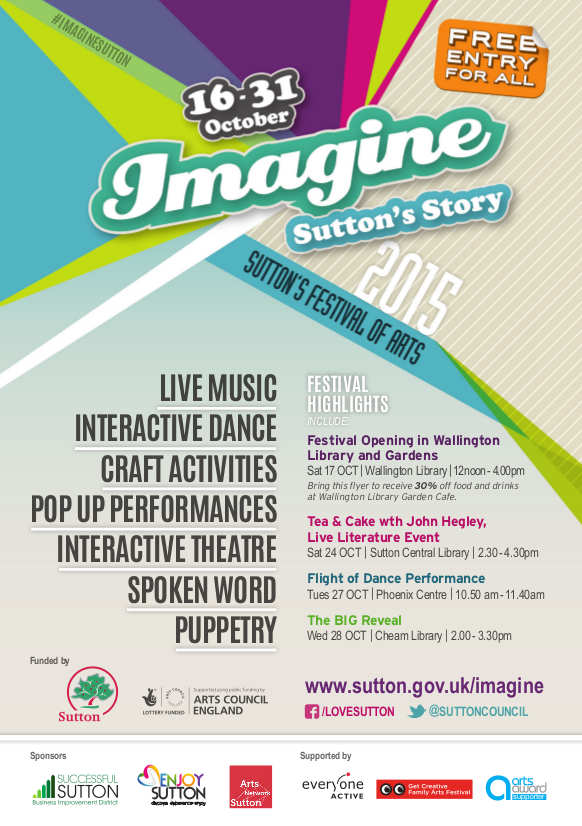
John Hegley hosts this inter-generational poetry event bringing together re-imagined stories of Sutton. Robin Vaughan-Williams has been working with the residents of two care homes in Wallington to create poems about their lives, from hissing gas lamps and clunking meters to lavender fields and wailing sirens, and Rachel Sambrooks has been working with younger generations (adults and teenagers) on their response to these poems and the place they live in. There’ll be video poems, group poems, individual readings, comic verse from John Hegley, and of course tea and cakes.

The event is free and open to all ages, but booking is essential as tickets are being snapped up. Book your place via EventBrite.

(Read more about the first stage of the project here, with some of the poems from the care homes.)

See the full flyer


Sutton Stories: Intergenerational Workshops

August 9th, 2015

Here are the details of the spoken word workshops that form the second stage of the Sutton Stories project I’ve been working on for the Imagine Festival of the Arts (part 1 here). They’ll be led by Rachel Sambrooks, and I’ll be assisting with the first two.

There are two sessions for adults and two for 13–18 year olds, and they’re all FREE! We’ll be performing the work we produce at an event on 24 October hosted by John Hegley in Sutton Central Library.

In July 2015, writer Robin Vaughan-Williams worked with residents in two care homes in Wallington to explore their experiences of Sutton, from bicycles and trams to shops and libraries. In the poems they produced we discover a Sutton of hissing gas lamps and clunking meters, lavender fields and wailing sirens.

In the spoken word workshops we’ll be using the experiences of older residents as our springboard, exploring our experiences of the borough to connect past and present in new ways. We’ll be working on group and prompts for individual work, using different devising techniques to help generate ideas. We will be working towards some poems to perform at the final live literature event on 24th October hosted by John Hegley in Sutton.  We will also have time to practice, share and rehearse before the event.

Dates and Booking

Spoken Word Workshops for young people, 13–18

I. Tuesday 29 September, 4.30–6.30pm

II. Tuesday 6 October, 4.30–6.30pm

Spoken Word Workshops for adults

I. Tuesday 29 September, 6.45–8.45pm

II. Tuesday 6 October, 6.45–8.45pm

You’ll also need to be able to commit to a rehearsal on Sunday 18 October and the performance on 24 October.


Sutton Stories: The Poetry of Memory

August 9th, 2015

In July I ran a series of three workshops in a couple of care homes in Sutton as part of the literature strand of the borough’s Imagine Festival of the Arts, which takes place 16–31 October 2015. Because the Festival’s theme this year is ‘Sutton stories’, we were working around the concept of place, using residents’ memories of Sutton and other places they have lived as material for a series of poems.

It was a great pleasure working with the two groups, who enjoyed sparking off one another and seeing their words written up and re-purposed as poetry. I found that the best way to work was to base the sessions around a loose discussion, with me picking up on some of the things people said, writing those up on the board and asking a few guiding questions to help draw out their memories and experiences. Some of the poems are collective, with contributions from several members of the group, and some are individual in their origin.

I have edited the poems, but they all retain the words and voices of the speakers, and in only a few instances have I added words or lines of my own. The test of this was when we came to video the participants reading their poems; I’d show them the poem first, then ask if they felt it was their own voice, and the response was always a clear yes. One thing I’ve learnt is that memory is selective, with an aesthetic logic of its own—you can trust in the poetry of people’s memory.

We’ll be playing recordings of some of the writing at an event hosted by John Hegley at Sutton Central Library on 24 October 2015, alongside writing produced by younger generations in workshops this September. If you’d like to participate in these, you can sign up to the Spoken Word Workshops on Eventbrite. In the meantime, here are a few of the poems to come out of the project.

He Went to Church

My father bought a television set
from Broughton Radio, aged sixty-five.
One day he walked to church in the snow
sat down in a pew and died.
My mother went to pay the bill
but the technician said his debts were forgiven.

Sunday was a day of rest, and like good Christians
we walked to church in the pouring rain
trying to keep our straw hats dry.
Over Westminster Bridge, the flower lady
on Parliament Square. We let the buses go.
Saved our tuppence for another day.

Source: Joyce Buckingham

Croydon Airport

The airmen used to come down to our house on the corner
to shelter in the garden when the sirens went.

Their melancholy wail and terrible moans
stopped everything. We hid in muddy dug-outs.
No dogs allowed.

When I came out my shoes had gone
along with the house
so a workman lent me his boots.

This was a collective poem fusing together several wartime recollections from participants at Ryelands, but drawing in particular on the memories of Beryl Steward.

Beddington Lane

We lived on a new estate on Beddington Lane
on the site of a pig farm.
Used to go fishing for sticklebacks with my mum
over the Wandle and up the hill
four years old, paddling in the stream with my fishing net.
My dad’s dad lived in Wallington
the gas lights hissing. You had to pull them down
feed a sixpence to the meter
turn the thing round and it went clunk.
Spare coins on the dresser in case the lights went out.

Source: Pam Bollom

Libraries

There is an overwhelming amount of knowledge
in this large room full of books
filled with the voices of children singing
for half an hour on Thursday mornings.

A quiet, meditative space
time to think in silence
look things up, email
and pick up your Freedom Pass.

It’s like passing your A-levels
flying around the world
being on the top of the South Downs
a non-denominational chapel.

This last poem is one of the few pieces resulting from a structured session. We were talking about libraries. I asked about the things people do in libraries, how they’d describe a library, and finally we invented similes for libraries, and you can see pretty clearly how each line in the poem originates from one of these categories.

Thanks to the staff (especially Dawn and Marie) and residents at MHA Ryelands and The Abbeyfield Society, and to Joanna Steele, the Imagine Coordinator, for their enthusiasm and making it all happen.